Digital Marketing Strategies for African SMEs That Actually Work
If you run a small or medium enterprise in Africa, the right digital marketing strategy can determine whether your business grows slowly or scales successfully.
Africa’s digital economy is expanding rapidly. The continent now has over 570 million internet users. That number continues to grow faster than almost anywhere else in the world.
This growth gives SMEs a powerful opportunity. You can reach customers, build a strong brand, and compete effectively without the large budgets traditional marketing once required.
However, digital marketing in Africa is not a copy of what works in Europe or North America. African consumers are mobile-first. Internet speeds vary across regions. Languages are diverse. Buying decisions are often influenced by community trust.
Your strategy must reflect this reality.
Here are seven proven digital marketing strategies for African SMEs that deliver real results.
1. Adopt a Mobile-First Strategy
In most African markets, mobile is the primary internet channel.
Smartphone penetration across sub-Saharan Africa continues to increase. Many users access the internet only through their phones.
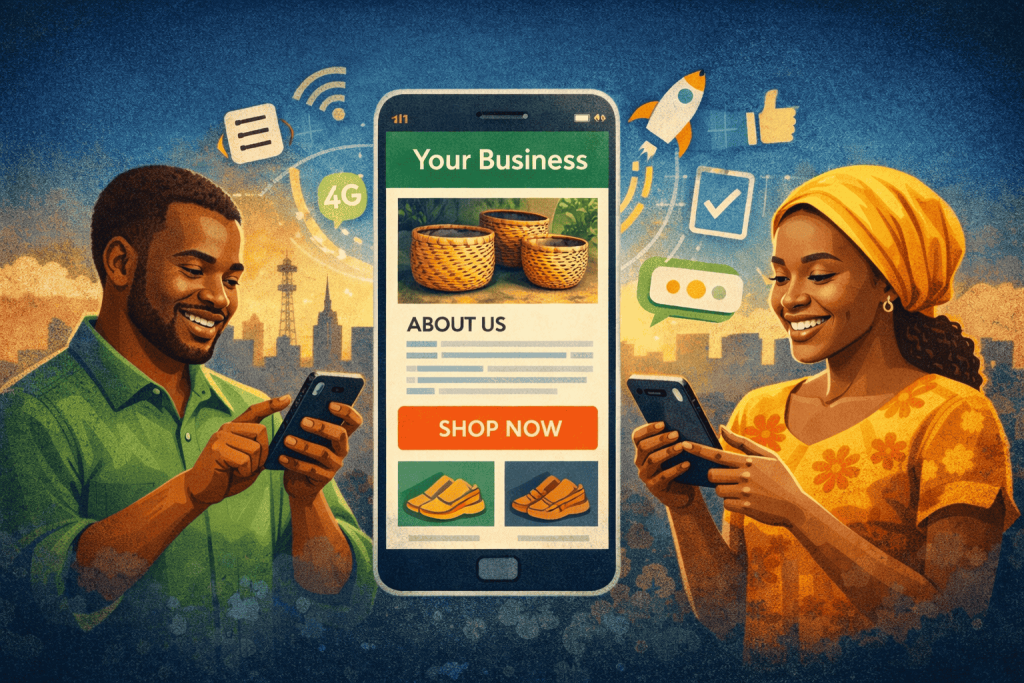
Your website must be designed for mobile users first.
Use responsive design. Compress images for faster loading. Keep forms short and easy to complete. Remove unnecessary pop-ups.
A potential customer in Nairobi or Lagos will not wait for a slow website. If it loads slowly or feels cluttered, they will leave.
Speed improves conversions.
Before launching campaigns, ensure your foundation is strong. Read Web Hosting Basics: What African Businesses Need to Know to set up your website correctly.
2. Use WhatsApp as a Core Digital Marketing Channel
In Africa, WhatsApp plays a central role in digital communication.
For many users, it is their primary online platform.
WhatsApp Business allows SMEs to create professional profiles, automate greeting messages, build product catalogues, and send updates to customers.
Businesses that nurture their contact lists consistently see strong engagement.
In B2B markets, decision-makers are often reachable directly on their phones. This speeds up conversations and builds trust.
For more practical tools, read 10 Free Digital Tools Every African SME Should Use Today.
3. Build a Presence on the Right Social Media Platforms
You do not need to be active everywhere.
You need to focus where your audience spends time.
Facebook remains strong across many regions. Instagram and TikTok dominate urban youth markets. LinkedIn works well for B2B businesses.
Many SMEs try to manage every platform. This spreads effort too thin.
Choose one or two platforms. Post consistently. Tailor content to each platform’s style.
Focused effort produces stronger results.
4. Create Content in Local Languages
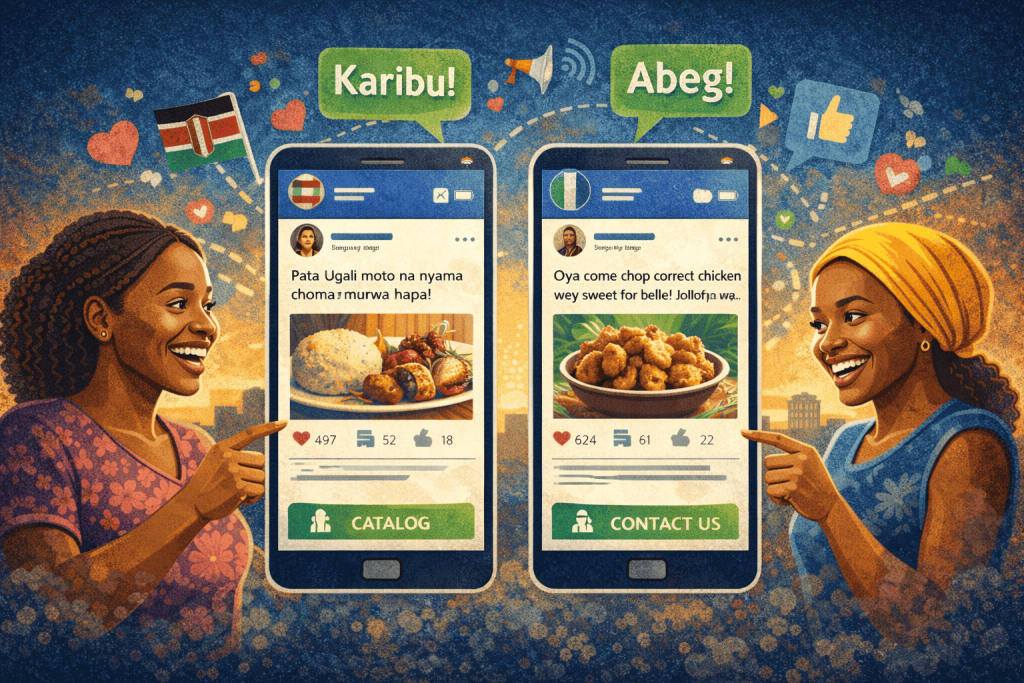
Official languages matter. Local languages connect emotionally.
Swahili, Hausa, Yoruba, Zulu, and Amharic resonate deeply with local audiences.
You do not need to create entirely new content libraries. Small adjustments work.
Use familiar phrases. Reference local culture. Write in a natural tone.
When customers feel understood, they engage more.
To strengthen trust further, read How to Build Trust Online: Website Essentials for African Businesses.
5. Invest in Local SEO
Most customers begin with an online search.
If your business does not appear on the first page, you miss potential sales.
SEO takes time but delivers long-term results.
Create and optimise your Google Business Profile. Use location-specific keywords such as affordable accountant in Accra or catering services in Kampala.
Publish helpful blog content that answers real customer questions.
Over time, SEO reduces reliance on paid advertising and generates consistent traffic.
If you are not yet online, read:
- The Real Cost of Not Having a Website in Africa
- The Complete Guide to Choosing a Domain Name for Your African Business
6. Partner with Micro-Influencers for Affordable Reach
Influencer marketing is not limited to large brands.
Micro-influencers usually have between 1,000 and 100,000 followers. Their audiences are smaller but highly engaged.
A local food blogger in Abuja can drive strong results. A niche fashion creator can introduce your brand to a targeted audience.
Micro-influencers often charge affordable rates. Some accept product partnerships. Platforms such as Influencer Africa can help you find vetted creators in your market.
Trust drives conversions.
7. Run Targeted Paid Advertising Campaigns
Organic reach has declined.
Paid advertising allows precise targeting by age, location, interests, and behaviour.
Start with a modest budget. Test two or three advert variations. Analyse performance after one week.
Increase spending on the best-performing version.
Testing protects your budget and improves results.
Final Thoughts
No single strategy guarantees success.
However, these seven strategies form a powerful and affordable toolkit for African SMEs.
Start small. Stay consistent. Improve gradually.
Africa’s digital economy will continue to expand. Businesses that adapt early will gain a competitive advantage.
To explore further, read:
- Going Digital Is No Longer Optional for African Businesses
- African SME Digital Transformation Mistakes: 8 Critical Errors
If you have a strategy that works for your business, share it in the comments.
📢 Stay Connected: Join our official Telegram channel for updates:
→ Nofcas Official Channel📱 Stay Connected: Join our WhatsApp channel for updates and insights.
→ Nofcas WhatsApp Channel